Articles · News
Pitchfork Just Gave Its First 0/10 in 19 Years. The Reason Should Scare Every Artist Using AI.
The Set Newsroom · Thu Sep 17 2026
Pitchfork hadn't given a zero since 2007. Then an AI album showed up, and the backlash exposed exactly what independent artists should be worried about.
Pitchfork just gave its first 0 out of 10 score in 19 years. It landed on Tyga's new album $TARFACE, and the reason behind that score is bigger than one bad record. It's a warning about what happens when AI eats real music without paying for it, and it's exactly why The Set refuses to touch the technology.
The Score That Broke a 19-Year Streak
Pitchfork critic Drew Millard tore into $TARFACE on August 12, 2026, calling it "slop pop" and writing that its "very existence has made the world a worse place." The last time Pitchfork handed out a zero was back in 2007. Read the review yourself and you can feel how personal it gets. Millard didn't just call the songs weak. He said the vocals were missing "human breath."
That's not a random insult. Tyga had already confirmed his team used AI, including the generator Suno, to help build parts of the album's '80s-inspired sound. Read the Pitchfork review
Tyga's Defense: "It's Just Like Auto-Tune"
In an interview covered by TMZ, Tyga compared the backlash to the early hate Auto-Tune got in the 2000s. "It's where technology is going," he said. "It's no different than when Auto-Tune came out. Some people were opposed to it, but real artists took it and used it." (source)
Here's the hole in that comparison. Auto-Tune corrects pitch on a voice a person actually recorded in a booth. It doesn't manufacture new sound by digesting someone else's back catalog first. That difference is exactly what's got labels, courts, and fans furious right now, and it's the part of the story most headlines are skipping.
The Video That Turned Backlash Into a Meme
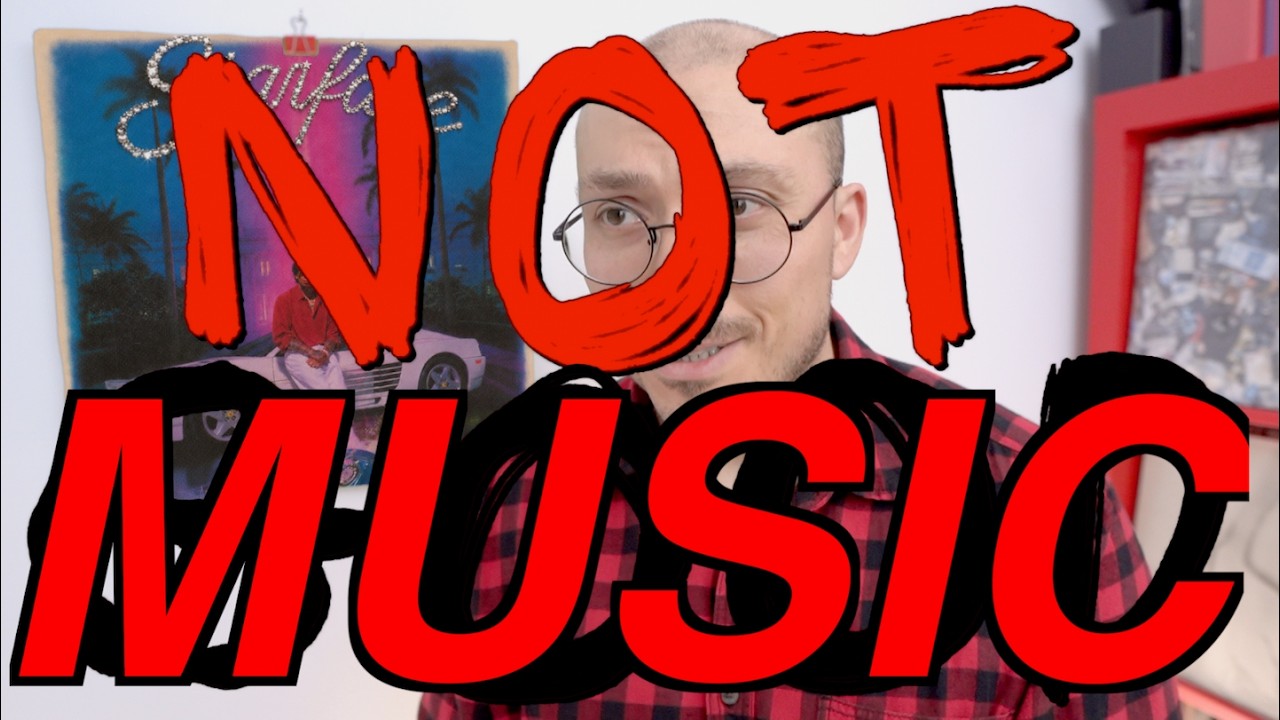
YouTube critic Anthony Fantano, who reviews music as theneedledrop, posted his own teardown of the album, titled "Tyga's $tarface is NOT MUSIC." It's become one of the most-shared reactions to the whole saga.
https://www.youtube.com/watch?v=YNu0HoEPcyk
Doja Cat piled on too, mocking Tyga publicly over the AI admission. When a rapper, a Pitchfork critic, and one of the internet's biggest independent music reviewers all land on the same take in the same week, that's not a coincidence. That's a signal about where the culture is right now.
The Real Fight Isn't About Taste. It's About Who Gets Paid.
While Tyga was busy defending his album, two much bigger stories were breaking in the same news cycle. Sony Music sued the AI company Udio, claiming it trained its model on roughly 30,000 songs without permission or payment. (source)
Then a Munich court ruled that Suno, a different AI music generator, owes damages to Germany's rights group GEMA for training on songs by Boney M., Alphaville, and Lou Bega without ever securing a license. It's the first European ruling that says AI companies actually have to license the catalogs they learn from, not just the ones they output. (source)
Put those two stories next to the Tyga review and the pattern is obvious. The AI music tools everyone's experimenting with got built by swallowing real songs, made by real working artists, with no consent, no license, and no check written back to them.
What This Means If You're an Independent Artist
Every AI model trained without a license probably ate some independent catalogs too. You don't have Sony's legal department to notice, let alone sue over it. Nobody's cutting a check to the small artist whose chord progressions or vocal runs trained the model that undercuts them next. The GEMA ruling matters here because it's the first time a court said that training itself, not just the output, requires a license and a payment. If that logic spreads to the US, it changes who owes who money across the entire streaming and PRO system.
And on the flip side, using AI as a shortcut in your own work is now a reputational risk, not a time-saver. Fans and critics are actively hunting for it in 2026. A Pitchfork zero used to be a rare, almost funny event. Now it's turning into a warning label people watch for on purpose.
How Fans Are Learning to Spot It
You don't need to be a critic to notice the same things Millard flagged in his review. A few tells keep showing up across AI-assisted tracks getting called out this year:
- Vocals that sit oddly smooth over the whole song, with no breath, mouth noise, or timing drift
- Instrumental parts that never repeat an imperfection, like a guitar solo with zero string noise
- An artist who avoids saying exactly which parts were AI-made when asked directly
- Credits that list a "producer" but no engineer, session player, or vocal coach
None of that makes a song unlistenable on its own. But once fans notice one of these, they start listening for the rest, and that's exactly what happened to $TARFACE.
Why The Set Is AI Opt-Out
This is exactly why The Set doesn't touch AI-generated vocals, AI-written songs, or AI session instruments. Every beat, mix, and session booked through The Set's services is made by a real person you can credit, pay fairly, and build a relationship with. Your masters and your fans stay yours, the same way a real vocal take stays genuinely yours in a way a generated one never fully is.
If you're building a catalog you still want to own in five years, that decision starts with what you record it with today. See how The Set works or check the free School for a breakdown on protecting your rights as AI keeps pushing into the industry from every angle. Owning your masters means less if a court somewhere decides the tools used to make them were built on stolen work. Start clean and you never have to worry about that fight.
Building direct fan reach also matters more now, not less. If AI keeps flooding streaming platforms with cheap, fast content, the algorithms recommending music get noisier and harder to break through honestly. Artists who already own a direct line to fans, through text or email instead of just an algorithm, won't feel that squeeze the same way. The Set's guide to text marketing covers exactly how to start building that now, before you need it.
The Takeaway
A 0/10 isn't really about one bad Tyga album. It's proof the industry is done pretending AI shortcuts are free. They cost you your reputation with fans who can spot the difference, and they may have already cost some other artist their song without anyone asking permission. Use the tools that help you. Just don't let them use someone else's work to replace you.
Questions
Why did Pitchfork give Tyga's album a 0/10?
Pitchfork gave $TARFACE a 0/10 because of the album's overall quality and its use of AI in production, which reviewer Drew Millard said stripped the vocals of "human breath." It's Pitchfork's first zero score since 2007.
Is it illegal to use AI in music?
Using AI tools isn't illegal by itself, but training an AI model on copyrighted songs without a license can be. A Munich court ruled against Suno in 2026 for exactly that, and Sony Music is suing Udio on similar grounds.
What does "AI opt-out" mean?
It means refusing to use AI-generated vocals, writing, or instrumentation in a release. The Set is AI opt-out, meaning every project uses real musicians, engineers, and performers instead of AI-generated content.