Articles · News
TikTok Cloned His Voice and Cashed In. A Judge Rules This Week on Whether Yours Is Next.
The Set Newsroom · Mon Sep 28 2026
TikTok made real money off a voice it never paid for. This week a Tokyo court rules on whether that's legal, and the answer could reach every musician who's ever posted a vocal take.
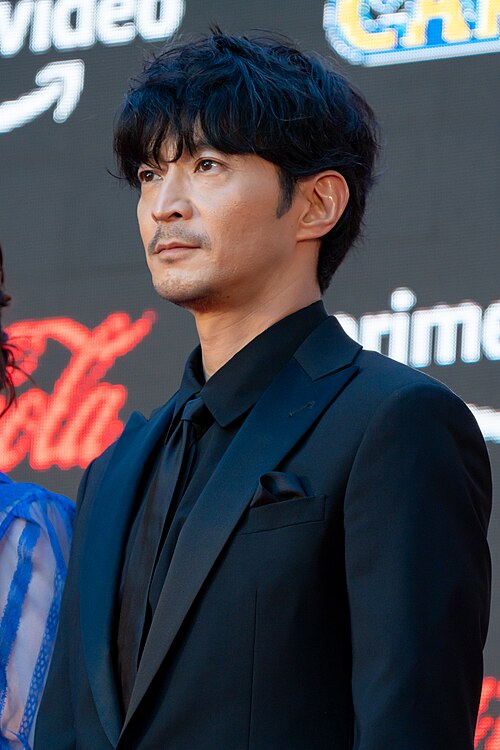
A Tokyo court is deciding this week whether TikTok can profit off an AI clone of someone's voice without paying the real person behind it. The plaintiff is Kenjiro Tsuda, a veteran Japanese voice actor known for Jujutsu Kaisen and Yu-Gi-Oh!. The case is believed to be Japan's first over an AI copy of someone's voice, and the ruling could set the rules for every artist whose voice, not just musicians, can now be recreated by a machine.
Here's what happened, what "publicity rights" actually means, and what independent musicians should do right now, before a court has to decide it for you too.
The Voice TikTok Called "Generic"
Tsuda found an anonymous TikTok account posting videos about conspiracy theories, occult stories and urban legends, narrated in what he says is unmistakably his own deep, distinct baritone. He never recorded a word of it. His legal team says an AI model was trained on his voice and used to generate the narration without his permission, according to The Japan Times.
TikTok's defense: it's just a "generic male voice," and any resemblance to Tsuda is "subjective at best," according to France 24. Tsuda's lawyers disagree, and they have an audience of over 200,000 subscribers as evidence that people know exactly whose voice they are hearing.
$3,200 a Month, Zero Dollars to the Real Voice
The anonymous account did not clone Tsuda's voice for fun. It monetized it. Court filings say it pulled in more than 500,000 yen a month, about $3,200, off videos narrated in his voice, according to CP24. Tsuda got none of it.
That is the part every independent artist should sit with. This is not a hypothetical about deepfakes someday. It is a real account, with a real audience, making real money off a voice that was not theirs to use. Swap "voice actor" for "singer" and the setup is identical: an AI model trained on your vocals, a channel nobody can trace back to you, and a payout that never touches your bank account.
This Already Happened in Music, Nobody Went to Court Over It
Musicians already lived through a version of this. In 2023, an anonymous producer released "Heart on My Sleeve," a song built on AI clones of Drake's and The Weeknd's voices. It racked up millions of streams before Universal Music Group got it pulled from platforms on copyright grounds, not because a court ruled on whether cloning a voice itself was illegal. Nobody ever had to answer that question, because the labels had enough leverage to get it taken down through a takedown request instead of a lawsuit.
Independent artists do not have that leverage. You cannot call a platform's legal department and get a same-day pull the way a major label can. That is exactly why the Tsuda case matters more for independent musicians than it does for a signed pop star. If the court rules a cloned voice violates publicity rights on its own, independent artists finally get a legal tool that does not depend on who you know at a distributor.
Why This Is Not a Copyright Case
Tsuda is not suing over a song, a script, or a recording. He is suing over his voice itself, using a legal idea called publicity rights, the ability to control and profit from your own identity. Japan's justice ministry has said a voice counts as "the symbol of one's personality" and deserves protection similar to your face or your name, according to Malay Mail.
That distinction matters. Copyright protects a specific recording or composition. Publicity rights protect you, the person, even when the AI never touched an actual file you own. Most musicians assume their voice is covered because their songs are copyrighted. It is not the same protection, and until now almost nobody has tested in court whether a voice alone can be defended this way.
The Scarlett Johansson Playbook Musicians Forgot
Tsuda is not the first to fight this battle. In 2024, Scarlett Johansson accused OpenAI of using a voice "eerily similar" to hers for a ChatGPT assistant, after she had already declined to license it, according to Taipei Times. OpenAI pulled the voice within days. That case never reached a verdict, so it set no legal precedent, it just proved that public pressure can move a giant company fast when the target is famous enough. Tsuda's case might be the first one that actually creates a legal precedent instead of relying on bad press.
The same week this lawsuit made headlines, a group of Japanese voice actors launched a campaign called "No More" against unauthorized AI voice mimicry, pushing platforms and studios to require consent before training any model on a performer's voice. Musicians do not have an equivalent organized movement yet. Maybe they should, given how many AI cover-song and AI-vocal tools are trained on scraped audio nobody consented to.
What You Can Do Before You End Up in Tsuda's Position
You do not need a lawsuit to start protecting your voice. A few things you can do this month:
- Register your name, likeness and vocal identity with a rights management service, the same way you would register a copyright.
- Watermark stems and masters before you send them to collaborators, mixers or distributors, so a leaked file can be traced back to its source.
- Read the fine print on every AI tool you use, including vocal effects plugins and mastering tools. Some training datasets are built from uploads nobody read the terms on.
- Search your name and your song titles monthly across TikTok, YouTube and Instagram. Cloned content spreads through re-uploads long before anyone official notices it.
- If you find a clone, document it immediately: screenshots, upload dates, view counts, and any monetization signals like sponsored content. That is exactly the evidence Tsuda's legal team used to build their case.
If you want a system that treats your voice and your masters as yours from day one, The Set keeps 100% of your masters and rights with you, no exceptions, no fine print.
The Takeaway
A judge in Tokyo is about to answer a question every working musician will eventually face: who owns a voice once a machine can copy it? Whatever the verdict, the fact that this case exists is the warning. Your voice is now a target, and the platforms hosting the clones are not rushing to protect you first. Get ahead of it before you are the one filing the lawsuit.
Questions
Can TikTok legally use an AI clone of someone's voice without permission?
That's exactly what a Tokyo court is deciding in the Kenjiro Tsuda case. TikTok argues the voice in question is generic, while Tsuda argues it violates his publicity rights, his legal ability to control and profit from his own voice and likeness. The verdict could set precedent.
What are publicity rights, and do musicians have them?
Publicity rights let a person control and profit from the use of their identity, including their voice, name and likeness. They're separate from copyright, which only protects a specific recording. Most countries recognize some version of publicity rights, though legal protection for AI-cloned voices specifically is still being tested in court.
How can independent musicians protect their voice from AI cloning?
Register your vocal identity where possible, watermark your files before sharing them, read the terms of any AI tool before uploading your voice, and monitor for unauthorized clones regularly. Document any clone you find immediately with screenshots and dates.